We know that applying to drama schools can be daunting. Especially when there is so much choice! The Stage’s How to Choose Your Drama School edition is full of expert industry advice to help you navigate your next steps.
Whether you're interested in acting, technical theatre, or other performance pathways, this essential guide will give you a clearer picture of your options and what to consider when applying.
This year’s special edition comes out October 16 and this year, you can access the digital edition for free!
Simply sign up via the link, and a free digital edition will land in your inbox on October 16, packed-full with drama school advice.
Work alongside industry specialists as you develop your skills and abilities through the three essential disciplines: Acting, Dance and Singing. Collaborate, create and gain performance experience from full scale musicals to a graduate showcase.
With this musical theatre course you’ll become a confident, creative and self-motivated individual, ready to break into the industry.
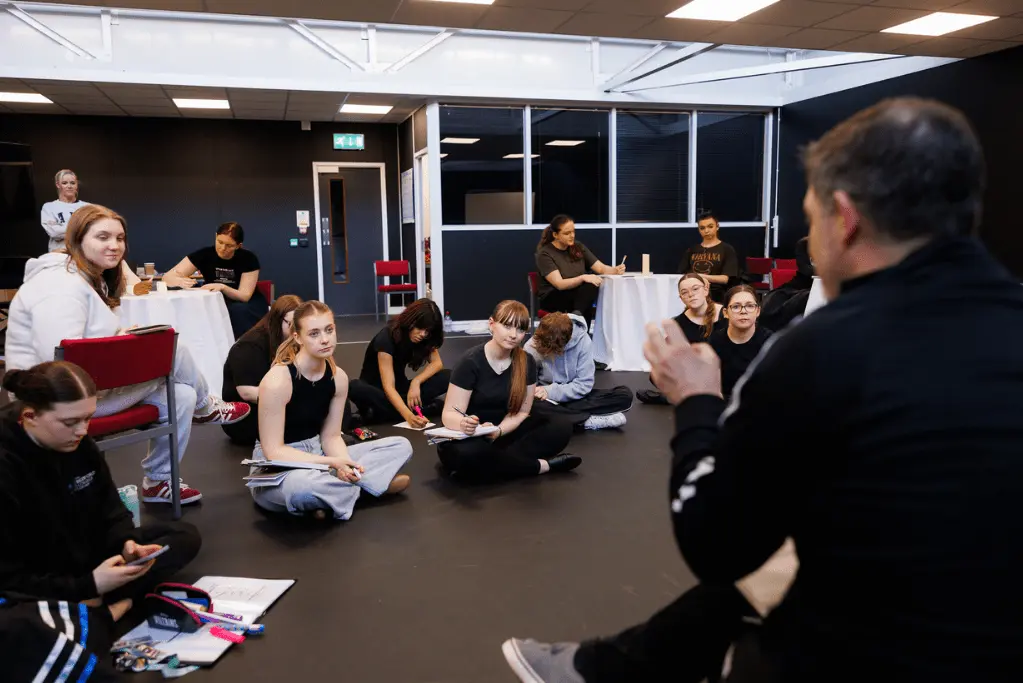
This September, The Quay Theatre is re-launching its Youth Theatre groups, providing weekly drama workshops for young people aged seven to 15 years.
The new groups provide an exciting opportunity for local young people to engage with the craft of theatre in a professional space, with a focus on all manner of acting skills, as well as collaboration and creative communication.
The aim is to give young people somewhere they can feel safe to explore their creative expression - and have plenty of fun too!
Attendees will also have the opportunity to perform in The Quay Theatre itself, taking full advantage of its extensive professional facilities. Their termly showcase will be fully kitted out with lights, sound, costumes and more – a great experience for budding creatives.
Mortal Fools Youth Theatre is open to young people aged 5–19 years. We run weekly Youth Theatre groups, split by age in Ashington.
At Mortal Fools, we focus on supporting children and young people’s creativity, wellbeing, and self-belief, using the medium of drama. We believe youth theatre can be a brilliant a vehicle to help young people to build their confidence and skills, support their mental heath, and to make sense of the world around them.
There are no auditions, no drama experience necessary, and no fees (although donations are welcome!). All we ask for is a willingness to give things a go, passion for performing, and lots of curious creativity.
Apply your passion and complete your training at Royal Birmingham Conservatoire – we offer drama school level training to mould you into a versatile actor and help you launch your career.
Our BA (Hons) Acting is designed to develop you practically, personally and professionally and prepare you for this challenging industry. We have carefully designed a contemporary course that will train you for a creative career in front of a stage, screen or radio audience. You will receive specialist training in voice, movement and singing, graduating with the skill and aptitude to take on the exciting and dynamic world of the dramatic arts.
This course equips you with the skills you need to become a professional actor; continually stretching and challenging you to reach new levels of personal achievement and self-discovery. As a vocational actor training course, full commitment and attendance would be expected.
If you love theatre and film, you can study them both in depth on the only course of its kind in Scotland. The innovative BA (Hons) in Theatre and Film combines theory and practice to prepare you for a flourishing career in the creative industries.
And… ACTION! Film and theatre are thriving industries, creatively and commercially. This course will give you the confidence and skills you need to enter careers in theatre, film, teaching, and professions demanding communication and creativity. You will be able to forge your own career path, taking full advantage of a course that is flexible to fit your needs.
Through in-house productions, industry based placements and hands-on training, you’ll learn all relevant skills relating to the work of the production technician in theatre, events, film and TV.
With technology at its core, this course offers practical, hands-on training in a variety of high-end lighting, sound, and video systems – skills that are in high demand for the theatre, events, film and television industries in Wales and across the rest of the UK.
You’ll have classes given by leading professionals operating at the top of their field, alongside several production placements, both based at the College and with our industry partners here in Wales.
With your placements, developing your expertise for a technical career in the creative industries is only one part of it. These experiences will also help you to build communication and team working skills that are essential to thriving in collaborative environments.
After graduation, you could take on roles such as a production electrician, lighting technician or programmer, sound and system engineer, video operator or programmer, among many more.
If you’re serious about a career in makeup artistry, our 4-Month Hair and Makeup Course is the perfect choice.
Led by award-winning makeup designers at CBMA Makeup Academy in London, this intensive, hands-on program covers everything from beauty makeup to special effects (SFX) techniques. You’ll work closely with industry professionals to master the essential skills needed for film, TV, and fashion. By the end of this course, you’ll be ready to create a wide range of looks, from classic beauty to intricate special effects, giving you the tools to launch your makeup artistry career.
Over 25 years ago Mountview created the UK’s first specialist three-year musical theatre training.
Decades later, our alumni continue to influence and shape the industry and Mountview is internationally renowned for the quality of its musical theatre tuition.
Early application is strongly encouraged.
COURSE CONTENT AND DELIVERY
Study takes place over three 12-week terms a year for three years. Students work in small classes and receive over 25 hours of direct teaching time each week, including one-to-one singing lessons.
The course is delivered through classes, projects, workshops and performance opportunities. During the course students engage in a range of performance projects, including Shakespeare, contemporary plays and musicals. The first half of each term is devoted to skills classes whilst in the second half of each term these skills are applied to performance projects.
In the second year, skills are further explored in collaboration classes which include peer integration and team teaching to enhance your creativity and help you to make connections between subjects.
Additionally, there is time given to tailored ‘surgeries’ to focus on detail and help develop independence and confidence in each individual’s practice.
Where do you start when you are looking for a career in the theatre industry? It’s challenging getting a job in any industry and the competitive nature of the theatre industry is often seen as a barrier. If you follow our top 10 tips, you will definitely be in a better position to not only get a job in the theatre industry but also be a success in your chosen field.
Having goals is something that will help you in the long run as it will give you something to work towards. But don’t forget, the journey to any career is never a straight, easy path - especially in theatre. There will be things that take you in all different directions and this is normal. As long as you don’t lose sight of what you want to gain and what you want your end goal to be, you will find the right career in theatre for you.
Not everyone wants to study and that’s fine because that’s not the only way to begin your theatre career or be successful within the theatre industry. There are so many ways to do this so you must do your research to find out what these ways are. We’ve made it easy for you because we’ve put all this information in one place. It’s good to have a rough idea of what job role you would like to pursue within the theatre industry. If you’re not sure what job in theatre you are best suited to, don’t worry. Our handy blogs describing different jobs within theatre will help give you an insight to the many different roles available and what you need to do to get there.
Take a look at our job descriptions here.
It will benefit you so much to have as much experience within your chosen area of theatre as possible, especially if you don’t want to study. If you don’t have a formal qualification (for example, a degree), having experience is what is going to make you stand out to potential employers when applying for jobs. Experience comes in many different forms but the three main forms are work experience, apprenticeships and internships. You can find information about all three of these experience opportunities here.
This is always a good suggestion because let’s face it, who doesn’t want to go to the theatre? Not only that but seeing a variety of different theatre shows will help you if you’re interested in a particular area of theatre e.g. if you’re interested in lighting you can take notes of lighting designs which peak your interest or are particularly inventive. Some theatre tickets can be a little expensive but don’t worry we’ve got that covered too. You can find a number of different ticket schemes where you can get discounted theatre tickets right here.
This is the 21st century and almost everything is on social media. Try and be as active as you can without becoming anti-social. It’s a great tool to keep up-to-date with industry news, shows and upcoming theatremakers. It may sound obvious but never post any offensive or discriminating posts on any of your social media channels. Some employers like to view their employees social media pages and you don’t want something inappropriate to pop up that you wrote 10 years ago!
This can be daunting but once you get into the flow of it, it can be really fun and so invaluable to you in the future. You should network every chance you get and this doesn’t always have to be at a networking event; it may be a fellow Performer you met at an audition or your best friends cousin who is the Head of Lighting behind Wicked the musical. There are also loads of networking events available for young theatremakers which you can find here.
It may be difficult at times to remain positive when starting out in a new career in theatre but it is really important to approach everything with positivity, especially when you’re going for interviews/auditions. If you’re an Actor auditioning can be constant throughout your career and you must always go into your auditions thinking that anything is possible. This is the same with any interviews for offstage roles too. If you go in with a negative attitude it will only go downhill from there.
When you’re new in the industry (even when you are more established) you’re likely to make mistakes. Of course you are, you’re only human and this is totally natural. Accept you have made a mistake but always make sure you have learnt from the experience and then move on to the next thing. There is no need to lose sleep over a little mistake because this may affect your ability to complete other tasks and could lead you to make more mistakes. Accept it, learn from it and move on to the next thing.
When you’re at the very beginning of your career in theatre, it’s wise to be realistic about what you want to achieve as well as what you are able to achieve. If you begin with an unrealistic goal it is unlikely you will get there at the beginning of your career and this can knock your confidence. Remember, every little step counts and these things take time.
Fringe Theatres and Festivals are a popular way to get a new piece of theatre noticed and produced. It can also be a great way to kick start your theatre career. Fringe venues are all over the country and features every type of theatre you can imagine. Most shows are brand new that no one has ever seen before. One of the more well-known fringe festivals is Edinburgh Fringe. The TV show Fleabag started as a one woman show at the Festival. It was later adapted into an internationally famous award-winning TV show that we all know. Fringe theatre is a great opportunity to learn, get tips and ideas on theatre, performance, comedy and more, the sky's the limit. Remember to always make sure you are paid fairly when working on the fringe.
https://www.ypia.co.uk/posts/10-tips-for-getting-into-theatre
https://targetcareers.co.uk/career-sectors/arts-and-creative/1015387-careers-in-theatre