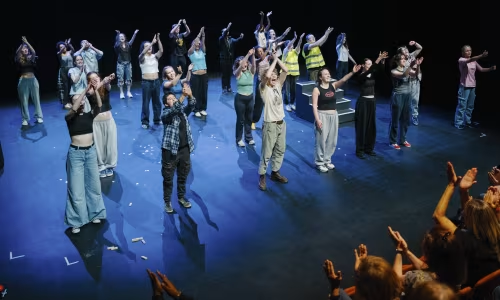
This Masters gives you a practical and theoretical engagement with the many forms of writing and production for theatre. Blending practice, theory and history, the programme is designed for those wishing to develop playwriting skills and knowledge of script development and support, opening the way to many theatre roles, including dramaturgy. You will learn about the changing roles of the playwright and dramaturge in contemporary theatre in the UK and elsewhere around the world, and be supported to define your own creative practice while developing valuable transferable skills in research, project management and critical reflection.

WHY THIS PROGRAMME

In this course, you will develop your skills in writing for radio, theatre and screen with an emphasis on your individual voice and style. 

You will graduate with a portfolio of pieces and an understanding of how to approach theatres and film and TV production companies and work towards securing commissions as a professional playwright or screenwriter.

The MLitt will provide you with technically-oriented tuition by leading contemporary and award-winning playwrights, with an emphasis on best practice in recent and contemporary writing.

At RADA, you learn by doing. You will engage in creatively rigorous and fulfilling vocational training that immerses you in the world of the professional playwright, ensuring you're artistically and practically equipped for the industry. Through continuous reflective practice you will workshop your writing, gain feedback and develop your creative work.

Teaching will be delivered by seminar (lecture and discussion), masterclasses, one-to-one tutorials, group tutorials and writing workshops.

Throughout your training, you will receive personalised feedback and career guidance to develop your expertise, resilience and leadership. The course will also include theatre trips, and prioritise an understanding of access, diversity, and inclusion.

This MA programme will enhance your creative and collaborative abilities while developing your playwriting craft. You will establish your identity as a creative practitioner with the skills and confidence to take an original idea from conception to production.

You will consider the role of new technologies, including artificial intelligence, and the impact they may have on the writing process and creative practice and industries.

Through this course you will write two plays; a one act play for a showcase reading, and the first draft of a full-length play for submission to professional production companies.

This new Master’s degree is designed to provide practical experience in directing and creating work for the theatre. Collaboration is at the heart of the programme to effectively replicate industry.

You will have the opportunity to work with students from other courses including acting, film, television and theatre production, set design, visual effects and costume – to deliver projects from start to finish.

Under guidance from experienced writers, directors and actors, you will explore and manage the entire directing process. From planning and prep work, through the rehearsal process to the final performance.

Working within the School’s Acting department you will have access to dedicated rehearsal rooms, our theatre and, where required, film & television studios.

The focus of this Master’s degree is the development of your directorial skill-set and style – whether that be in creating new work or in exciting and innovative interpretations of existing plays.

You will work on a wide range of approaches to directing, ranging from how to work with text to creating work through multi-media in performance. There are opportunities to look at ways of creating your own work with an ensemble and gain knowledge of funding applications so you are ready to set up your own company after graduation.

By the end of this intensive year-long programme, you have completed at least three contrasting and challenging projects. There will be opportunities to shadow directors and work as an assistant director on a range of projects to help inform your own practice.

This course, which is the first of its kind in the UK, provides individually tailored tuition that elevates your skills in readiness for a professional role as an opera director. 

Mentored by tutors who are professionals drawn from across industry, you’ll examine the key elements that will contribute to your artistic and creative development – including acting methodologies, rehearsal techniques, principal singing languages and movement. 

You’ll also explore different operatic forms, styles and conventions. Investigating artistic relationships – such as the design process and the conductor’s role – forms part of your tuition too. 

Practical directing experience in a collaborative setting is fundamental to your training. You’ll work across various creative disciplines involved in producing opera, immersing yourself in the many performances and projects that take place here at the College – with opportunities to direct in-house opera scenes as well. 

You’ll observe professional opera directors at work – both at the College and at the Welsh National Opera – to gain a better understanding of the industry in practice and build your network of contacts. 

Your course culminates with a fully negotiated industry placement in a professional UK opera company, focusing on the role of staff director and associated areas of expertise.

With school holidays offering many young people the opportunity to take part in creative activities, it’s often a time when interests grow, and future ambitions begin to take shape.

Whether a young person is already engaged in the arts or just starting to explore, there are many different pathways into a career in the creative industries. However, for many families, these routes can feel unclear or uncertain.

Recent research from Netflix and the National Youth Theatre found that 89% of parents from working-class backgrounds would be unlikely to encourage their child to pursue a career in the creative industries. Building understanding and confidence among parents and carers is an important step in helping more young people feel supported in exploring these opportunities.

Introducing Parents Unscripted

Parents Unscripted is a new series from Discover! Creative Careers, created in collaboration with organisations across the creative industries. The series shares the perspectives of parents whose children now work in the sector, offering honest reflections on their journeys.

We’re proud to have collaborated on one of the films in the series, developed alongside Discover! Creative Careers and the National Theatre. In this film, Angela Jumbo, mother of actor and playwright Cush Jumbo, reflects on her child’s journey into the industry and shares her perspective as a parent.

You can watch the other films in the series here!

Why this matters

We know that when parents and carers feel more confident about creative careers, it can make a real difference to a young person’s ability to pursue them.

By sharing these stories, Parents Unscripted aims to open up conversations, challenge misconceptions, and highlight the many routes available across the creative industries.

Share with your networks

We encourage teachers, industry professionals and partners to share these films with their networks, whether through newsletters, social media, or conversations with young people and their families.

Helping more families understand the opportunities available in the creative industries is a vital step in supporting the next generation of talent.

Find out more about Discover! Creative Careers here.

Find out more about the National Theatre Skills Centre here.

Work experience offers practical, hands-on insight into the theatre industry, helping you build skills, confidence, and a clearer understanding of different career pathways. It’s an ideal first step when exploring a future in theatre. As an initial step, we recommend getting in contact with your local theatre to see if they offer any work experience opportunities.

While many people associate theatre careers with performing, there are a huge number of offstage roles that make productions possible. From stage management and lighting to marketing, producing, costume, sound, and technical theatre, work experience allows you to explore these departments and discover which areas interest you most. Taking part in work experience placements can provide a range of valuable benefits, including:

Understanding How Theatres Work:
Working within a theatre environment allows you to see how different departments collaborate to bring a production to life. This perspective is incredibly valuable if you're considering a career in the sector.

Developing Practical Theatre Skills:
Work experience often gives you the chance to assist with real tasks, whether that’s supporting technical teams, observing rehearsals, helping front-of-house teams, or working with marketing and administration departments.

Building Confidence and Professional Skills:
Being part of a professional environment helps you develop communication, teamwork, and problem-solving skills that are essential across the creative industries.

Making Connections in the Theatre Industry:
The theatre industry is highly collaborative. Work experience placements can introduce you to professionals working in the field and help you begin building a network within the industry.

Strengthening Future Applications:
Whether you're applying for drama school, university courses, apprenticeships, or entry-level roles, work experience demonstrates enthusiasm, initiative, and commitment to the sector.

Where to Find Theatre Work Experience in the UK

Many theatres and arts organisations across the UK offer work experience placements, shadowing opportunities, and youth programmes. Availability and application processes vary, but the following organisations regularly provide opportunities for young people interested in theatre careers:

London

South of England

Midlands

North of England

North of England

Wales

Scotland

Northern Ireland

You may also want to check the websites of theatres local to you, as many venues offer placements throughout the year or during school holidays.

Tips for Finding Theatre Work Experience

Work experience is one of the most valuable ways to begin exploring opportunities in theatre. It provides a clearer understanding of how productions are created and how different departments work together behind the scenes.

Whether your interests lie in technical theatre, production, stage management, marketing, or theatre administration, gaining offstage experience is an excellent way to start your journey in the industry.

The Climate Playwriting Prize 2026 will uncover the most exciting new plays about the climate crisis, and support them to find their audiences. 

We believe that playwrights have a vital role to play in the conversation around the climate. Theatre is a space for animating audiences, forming communities, and experimenting with form; a space for processing the past, articulating the present, and imagining the future. In order to surface the breadth and diversity of new stories about this planetary moment, the Climate Playwriting Prize is an open invitation to playwrights to respond creatively to this subject matter. Regional and touring theatre is playing a vital role in engaging audiences, and we are partnering with organisations all around the country to deliver workshops to writers, unlocking how they might want to tell their climate story.

This moment is marked by rising temperatures, escalating impacts of change on communities and ecosystems, but also by the potential for us to transform society for a flourishing, equitable future for all life. The need for new stories that help audiences grapple with the realities and possibilities of this crisis has never been clearer

In order to surface the breadth and diversity of new stories about this planetary moment, the Climate Playwriting Prize is an open invitation to playwrights to respond creatively to this subject matter. We are partnering with organisations all around the country to deliver workshops to writers, unlocking how they might want to tell their climate story.

The winning playwright will receive:

The Climate Playwriting Prize 2026 is funded by Climate Spring

Applications open in June 2026 with the deadline in September.

Head over to the opportunity page to read all about what is expected and any requirements.

theatre works!

A paid summer work and cultural exchange opportunity for creatives aged 18+.

Camp America offers a paid summer opportunity to live and work at an American summer camp for 9–12 weeks, with performing arts and creative roles available across camps in the USA. This is more than just work experience - it’s a chance to use your creative skills while living the full summer camp life!

Creatives from all backgrounds are placed in roles where they can teach, lead and inspire young people through acting, singing, dance, music, technical theatre and production, while also being part of a wider camp community. Alongside your role, you’ll take part in classic camp activities, build international friendships and experience everyday life in the USA. While we work with specialist theatre and performing arts camps, performing arts roles are available across many different camps, not just specialist ones.

This opportunity is ideal for those who:

Camps generally run from mid-Jun to mid-August – but this can vary by camp and location.

Read me aloud